
Why collect comic-book objects: enjoyment, design and cultural value
Why collect comic-book objects? The question occurs to many readers when they encounter a Tintin figurine, a vintage Asterix poster or a first edition of Blake and Mortimer. Collecting is about far more than accumulating possessions: it is a search for meaning, beauty and a tangible connection with stories that have shaped several generations.
Franco-Belgian comics offer an exceptionally rich field for collectors. From Smurf figurines and Gaston Lagaffe prints to early Spirou albums, every object carries a story. It recalls a scene, an artist or a particular moment in the history of comics.
The psychology of collecting
Why do people collect comic-book objects?
Collecting answers a very human desire to gather, organise and understand. A collector may want to complete a coherent set, preserve fragments of a fictional universe or simply extend the pleasure of reading beyond the page.
For some, the appeal lies in the search itself. For others, it is the lasting satisfaction of living with objects that have genuine personal meaning. Choosing what belongs in a collection is also a form of self-expression: the result reflects a reader’s history, tastes and memories.
Emotion at the heart of a collection
Tintin, Asterix, Lucky Luke and the Marsupilami accompanied the childhood of millions of readers. A well-made figurine or a familiar object can bring those memories back instantly. Its emotional value may therefore be much greater than its resale price.
Every collector develops a different focus. One may look for lunar rockets in every size, another for Pixi scenes in painted metal, and another for objects linked to a single album. That personal selection is what turns a group of objects into a collection.
What can you collect?
Figurines and decorative objects
Figurines are often the most accessible way to begin. Tintin’s famous 90cm lunar rocket and the characters from Asterix are attractive both as designs and as reminders of memorable adventures. Displayed carefully, they turn a room into a personal gallery.

Decorative collectibles also include:
- screen prints and lithographs by artists such as Franquin or Hergé;
- replicas of iconic objects, from the Destination Moon rocket to Obelix’s menhir;
- original posters and promotional material;
- character sculptures in resin or bronze.
First editions and original artwork
Experienced collectors often turn to first editions. A 1931 edition of Tintin in the Congo, a black-and-white copy of The Crab with the Golden Claws or an early Asterix the Gaul can be both rare and historically significant.
Original comic pages are unique works of art. They show the artist’s hand directly: pencil marks, corrections, inking and layout choices. In this case, the collected object is not merely derived from a story; it is part of the creative process itself.
Design and cultural heritage
When comics become three-dimensional art
Franco-Belgian comics have instantly recognisable visual identities: Hergé’s clear line, Uderzo’s energy and Franquin’s expressive movement. The best figurines translate those qualities into three dimensions without losing the character of the original drawing.
Tintin’s lunar rocket is a perfect example. Designed for Destination Moon, it has become a twentieth-century design icon in its own right. Comic-book objects therefore sit at the meeting point of popular art, design and cultural history.
Decorating with a collection
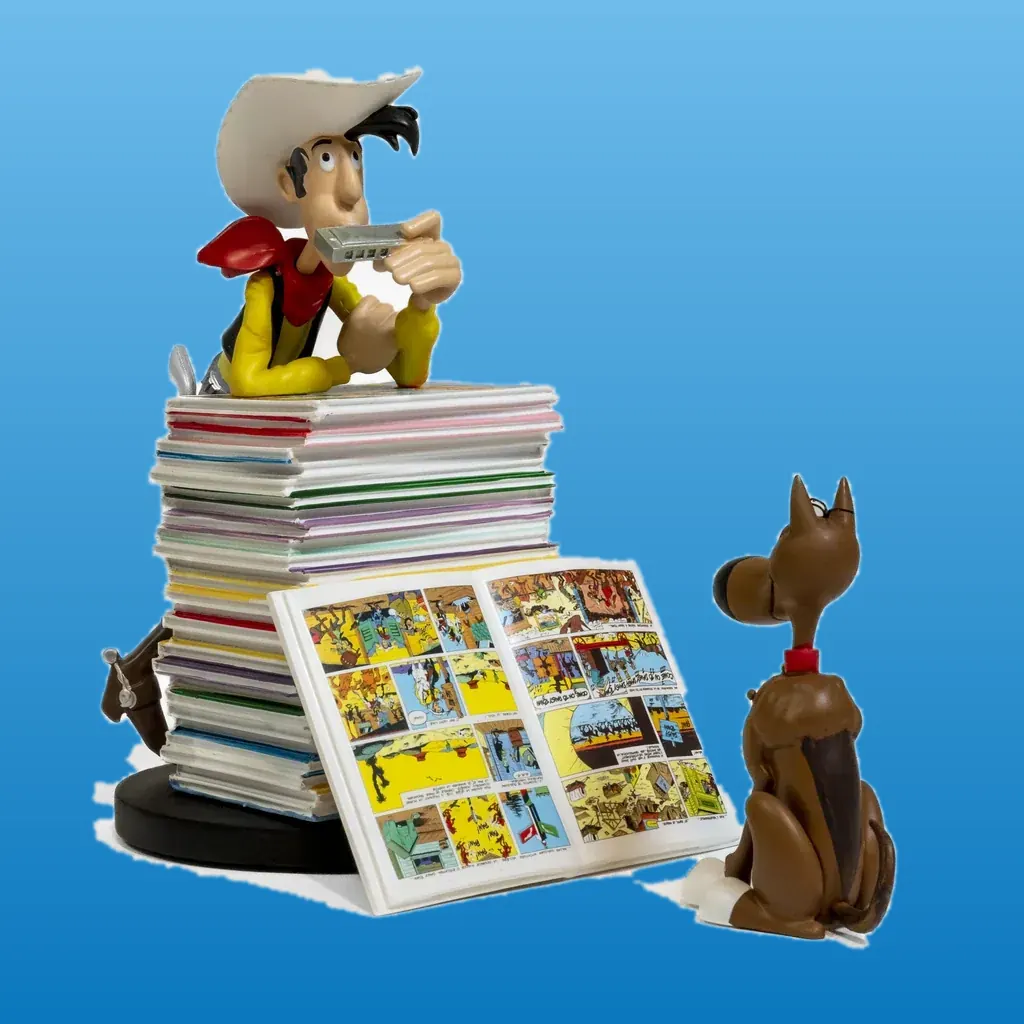
A collection creates a narrative interior. Unlike anonymous decorative objects, each piece suggests a scene and invites conversation. Figurines, books and prints can form a coherent display when they are grouped by artist, series, material or colour. Lucky Luke and Rantanplan on a stack of albums is a direct example: the collectible enters into a conversation with the books it represents.
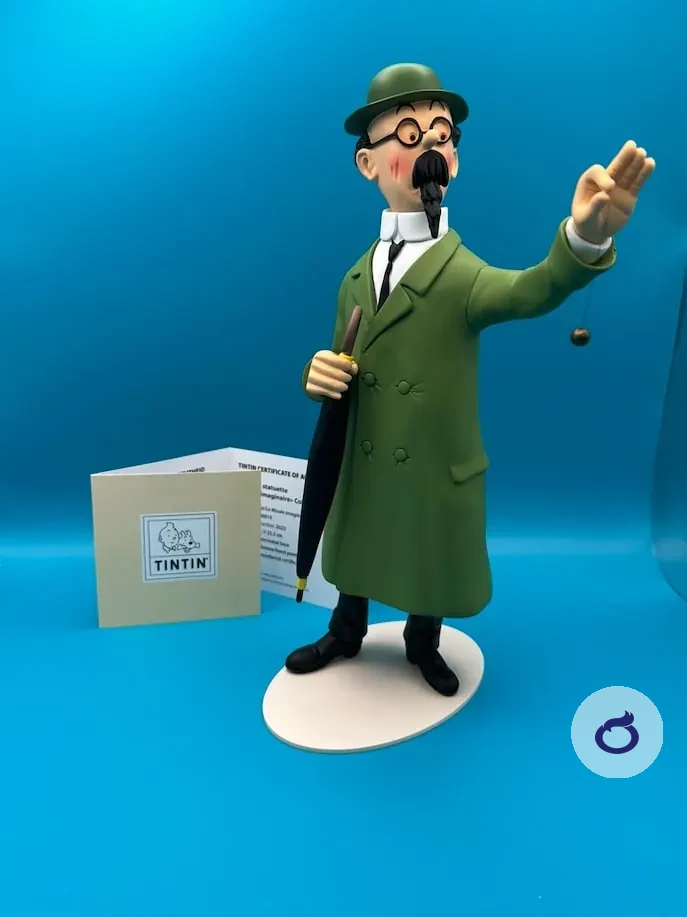
Secondary characters can be especially evocative. Professor Calculus with his pendulum, Getafix at his cauldron or Captain Haddock in a familiar pose may recall a precise panel at a glance. That is also the idea behind Tintin’s Imaginary Museum, which gives volume to characters and objects sometimes seen only briefly in the albums.
Can a collection be an investment?
Investment should not be the only reason to collect, but value is part of the subject. Tintin, Asterix, Blake and Mortimer and the Smurfs enjoy a broad and enduring audience. Rare pieces in excellent condition can therefore acquire long-term cultural and financial value.
The main factors are:
- rarity and condition;
- a documented signature or provenance;
- the cultural importance of the original work;
- manufacturing quality;
- the presence of the original box and certificate.
Limited editions, artist collaborations and anniversary releases attract particular attention. A focused, carefully documented collection is usually more meaningful—and often more desirable—than an accumulation of unrelated objects.
A community and something to pass on
Collectors do not operate in isolation. Fairs, clubs and specialist forums make it possible to exchange knowledge, discover unusual pieces and meet people who understand the same references. This social side adds another layer of enjoyment.
A thoughtful collection can also outlive its creator. Kept in good condition and properly documented, it becomes a family archive and a record of personal taste. The ultimate purpose is not merely ownership but curation: selecting, preserving and eventually passing on objects that matter.
Frequently asked questions
Which collections are most likely to gain value?
Objects linked to landmark series such as Tintin and Asterix have the strongest established audience. Condition, provenance and genuine rarity remain decisive. First editions, signed original pages and scarce early promotional objects are among the most sought-after categories.
Are limited-edition figurines always valuable?
No. A low edition size helps, but it does not guarantee demand. The quality of the sculpture, the importance of the character, the manufacturer, condition and completeness all matter. A certificate and original packaging can make a significant difference.
What do people collect most often?
Character figurines are particularly popular, followed by first editions and vintage merchandise such as toys, puzzles and tableware. Tintin’s rocket remains one of the most recognisable objects and has been produced in many sizes and materials.
Is a complete collection achievable?
Usually not—and that is part of the appeal. Even a well-defined series can include foreign editions, prototypes, colour variants and short-lived promotional items. The collection remains open, giving the search a lasting purpose.
Choosing your next piece
Comic-book objects unite design, emotion and cultural memory. They allow us to live with worlds that helped shape our imagination and to share those worlds with other enthusiasts.
Every item in the CollectoFig shop is described with its material, edition size and condition so that you can choose with confidence. You can also learn more about us.