



Sale -20% 
Pixi
Pixi Figurine: The Smurfs' Christmas Market
€1,750.00 €1,400.00
View the piece
Official retailer
Three specialist makers define the Franco-Belgian figurine market: Tintinimaginatio for the world of Tintin, Pixi for short-run painted-metal pieces and Collectoys for accessible resin sculptures. Every item is fully documented, from the manufacturer to its edition number.
Enter the shopThe piece 01/06
Reduced prices
A few pieces from the catalogue at a reduced price, while stocks last.
The worlds
Resin and metal from Tintinimaginatio, metal and bronze from Pixi, and Collectoys resin: Tintin, Asterix, the Smurfs, Blake and Mortimer, The Bluecoats, Marsupilami, Gaston, Lucky Luke and other Franco-Belgian characters.
Tintinimaginatio
Tintinimaginatio translates Hergé's work into hand-painted resin and metal compositions: the red and white checkerboard of the moon rocket, the characters from the Musée Imaginaire in their exact costume, the cars from the albums at 1/12 scale, the lead scenes with several characters. Each piece is numbered and delivered with a certificate of authenticity.
View the pieces
Pixi and Collectoys
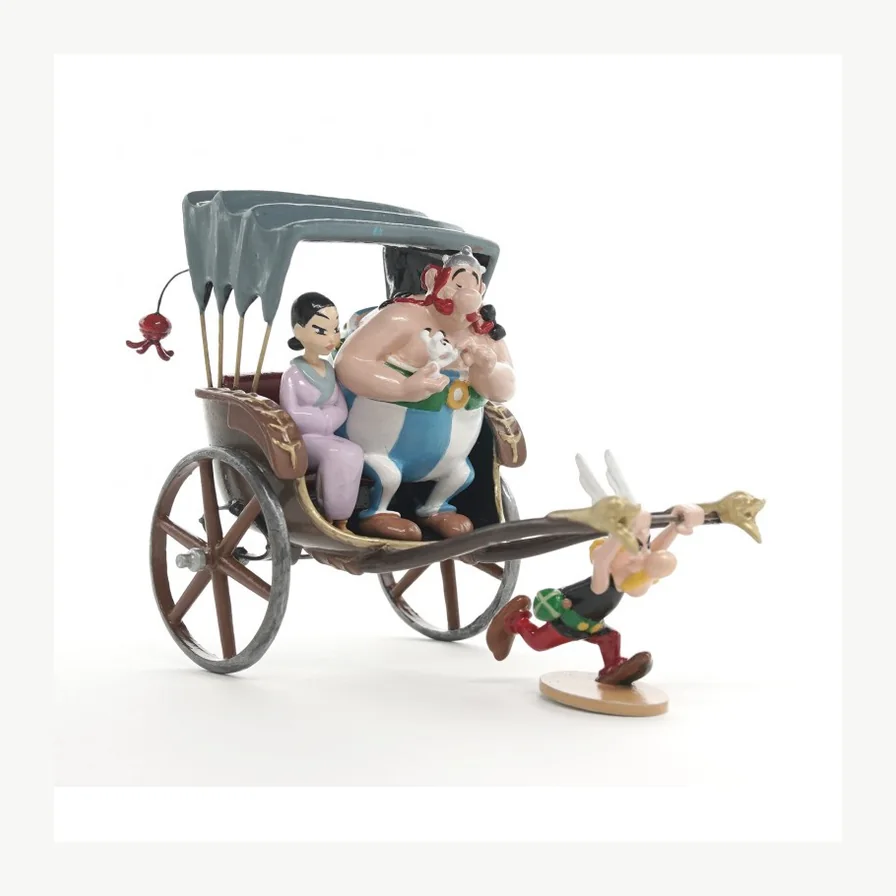
Two materials, two levels of detail. Pixi sculpts in hand-painted metal scenes that bring together up to three characters with volume decoration: the rickshaw with its turning wheels, the hollow tree trunk with the three Gauls inside. Collectoys works with resin in generous formats with the heroes featured with their own albums.
View the pieces
Pixi
Pixi offers the world of Peyo in hand-painted metal in two collections: Origine for the single figurines on a base, Mini Village for the complete scenes with decor. The Origine range began in 2012 with poses for everyday gestures, gardeners, cooks, dreamers. Mini Village recreates spaces of the entire village, the Christmas market, the saloon, the pedestrian crossing.
View the pieces Pixi and Collectoys
Jacobs designed his decors with the precision of an architect, and Pixi meets this requirement: volume sarcophagus with hieroglyphs in relief, Club armchair in metal treated with its buttons and leather, Pixirama with lighting integrated into a cube of lacquered wood. These are compositions, not isolated figurines.
View the pieces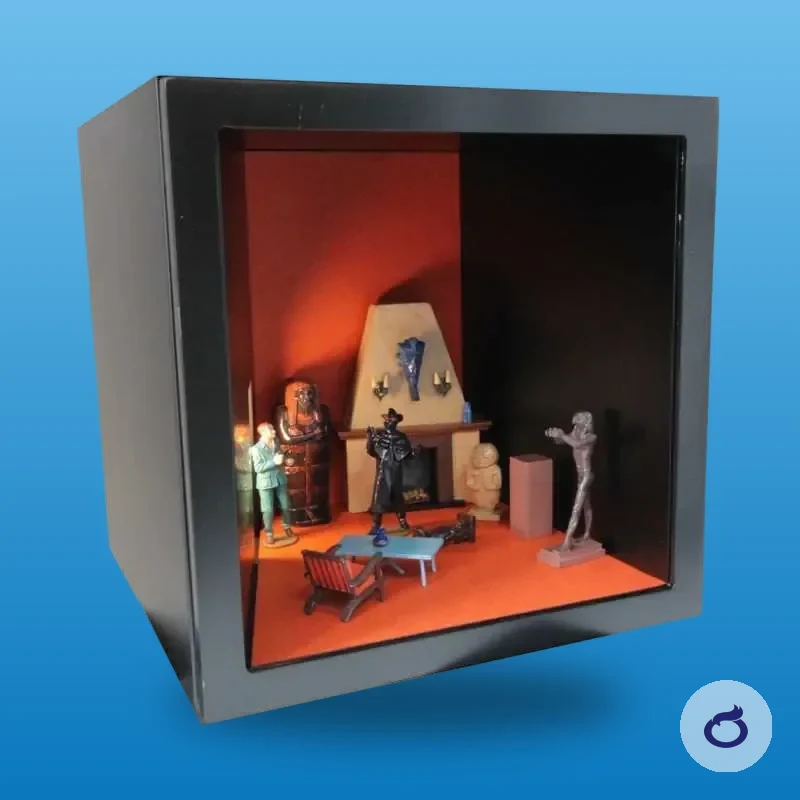
Pixi
Lambil constructed Blutch and Chesterfield as the mirrored portrait of two ways of being at war. Pixi translates this tension into painted metal: from the portrait in uniform to the saloon complete with counter, from the trappers' canoe to the fully loaded rickshaw of Captain Stark. Each composition captures a specific moment from the albums.
View the pieces
Collectoys
Franquin and Lambil outside the five usual universes. The Marsupilami lying on a branch, the piranha at the end of its tail. Chesterfield with hands behind his back, kepi and chevrons. Gaston under his pile of books, Lucky Luke on the harmonica. Same Collectoys resin, other readers.
View the pieces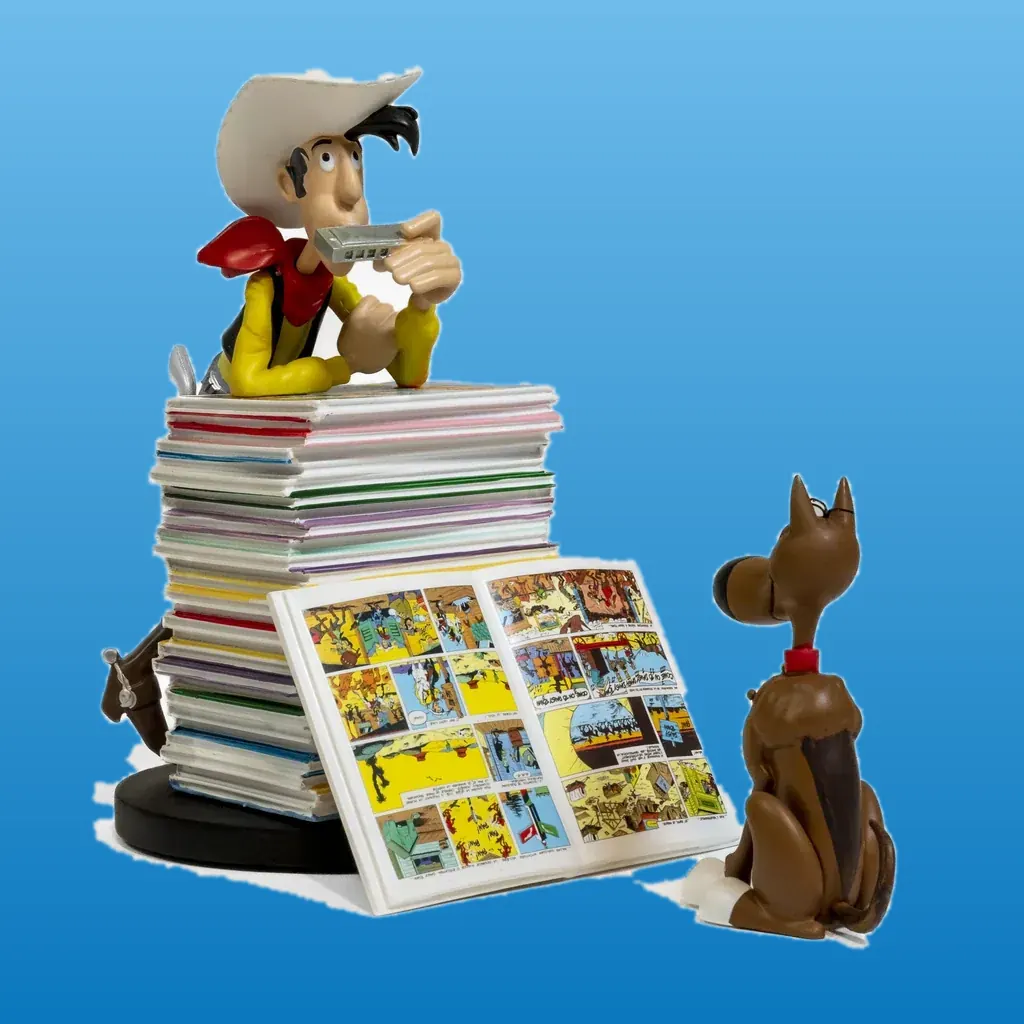
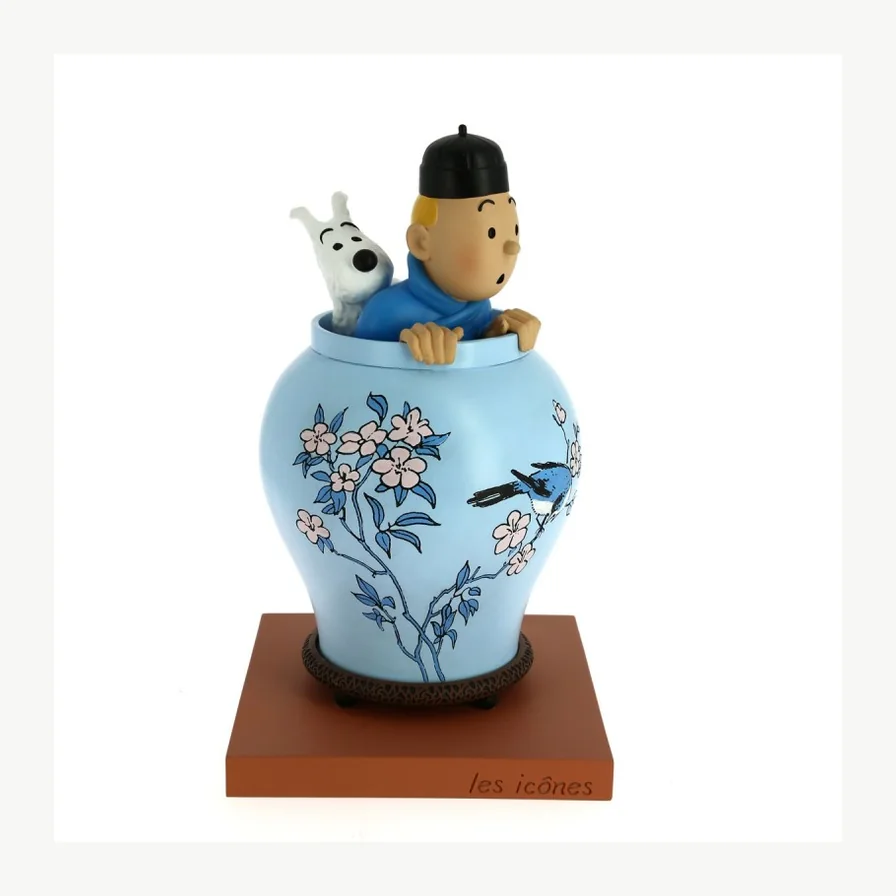
Holding a Tintinimaginatio resin sculpture or a Pixi figurine is unlike holding an ordinary souvenir. The object has weight and presence; it turns a familiar image into three dimensions—the blue of Tintin's jumper, Haddock's beard, Obelix's rounded silhouette or Asterix's wings. A panel once confined to an album now lives on a shelf in hand-painted resin or metal.
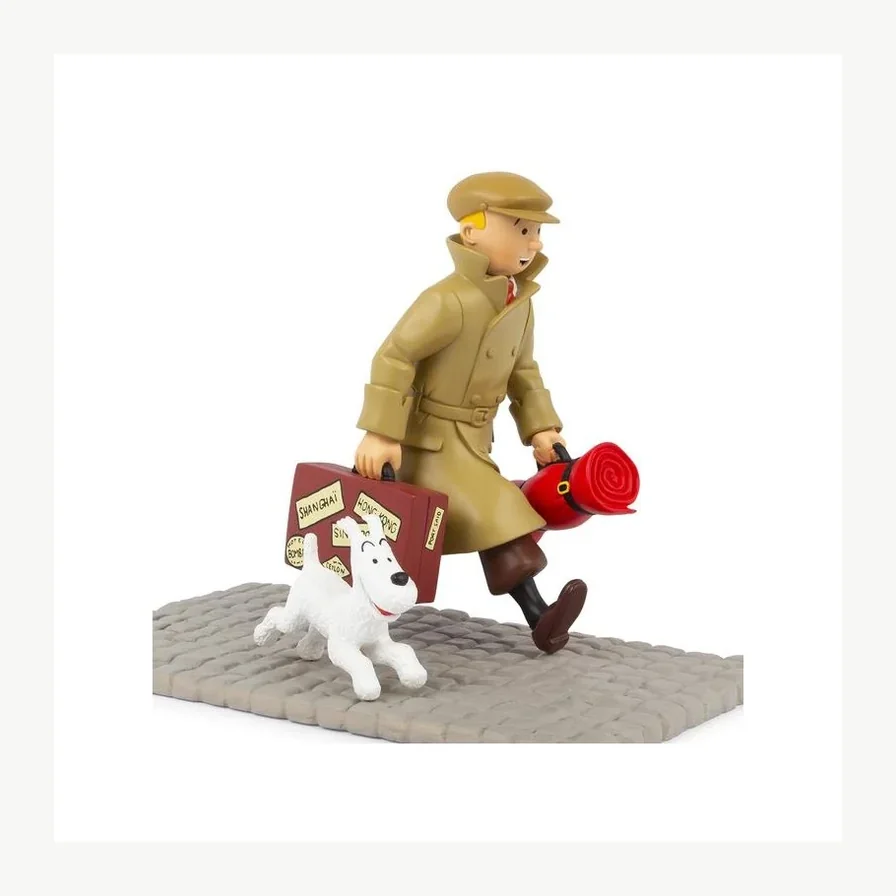
Tintin and Asterix figurines reach something many collectibles cannot: the memory of reading. Asterix ready to fight, Obelix smiling, Tintin in his red armchair with Snowy, or the Smurfs in their village can instantly recall a scene, an album and a moment from childhood.
There is also the pleasure of the search. Pixi produces short runs that are rarely reissued: finding a long-sought composition, completing an elusive series or discovering a scarce piece before it sells out. A carefully chosen display says something about the reader who assembled it—and that is what makes it a collection.

The Icons
€175.00
View the piece
Rockets
€149.00
View the piece

Rockets
€650.00
Order
View the piece

Rockets
€1,250.00
Order
View the piece

Rockets
€189.00
Order
View the piece
Pixi
€1,750.00 €1,400.00
View the piece
Pixi
€1,095.00 €985.00
View the piece
Pixi
€250.00
View the piece